Outsourcing Architectural Rendering: In-House vs. Nearshore Studio
Most firms do not have enough rendering work for a full-time visualizer, and offshore studios cost you a day per revision. A comparison of the four ways to get renderings done, and how to run an outsourced pipeline that feels in-house.
Published October 27, 2026
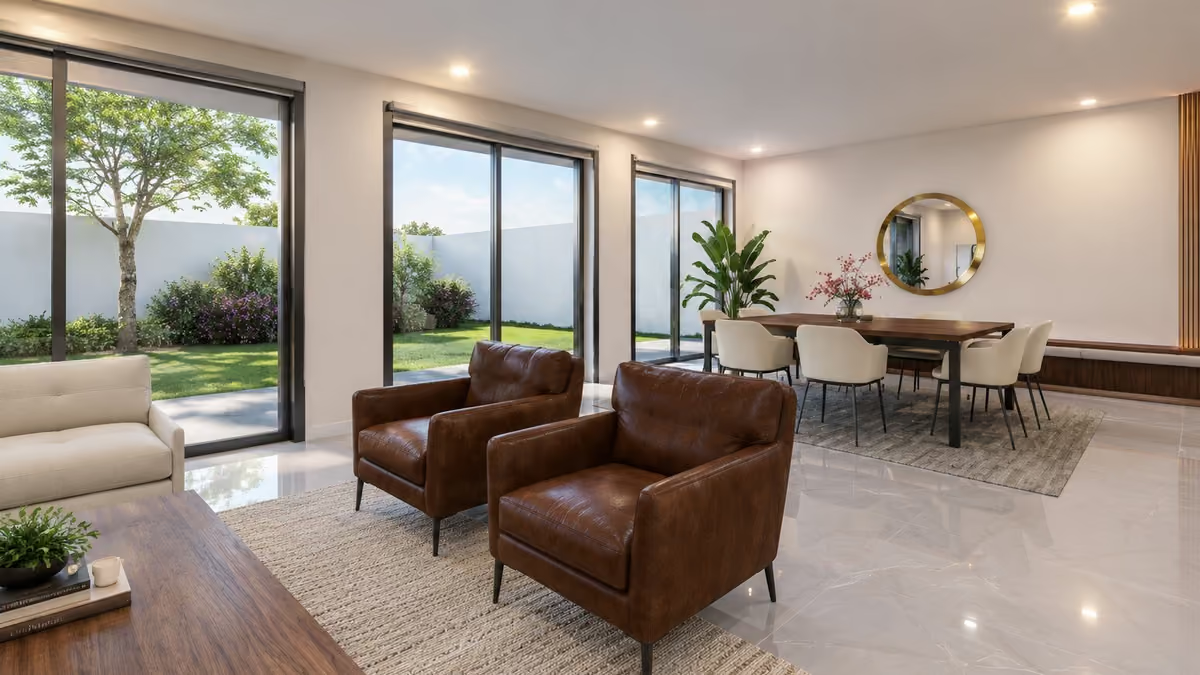
Every architecture firm reaches the point where somebody has to produce renderings every month and nobody on staff has the time. There are four ways to solve it: hire a visualizer, use freelancers, send the work to an offshore studio, or work with a nearshore studio. Each is right for a different kind of firm. This article compares them on cost, speed of communication, consistency and risk, and ends with what a well-run outsourced pipeline looks like.
The four options
In-house visualizer
A full-time 3D artist on staff. You pay a salary and benefits whether or not there are renderings to produce that week, plus software subscriptions for modeling, rendering and post-production, plus a workstation capable of rendering high-resolution images. In return you get somebody who sits in on design meetings, knows the projects and can produce a quick view in an afternoon.
It makes sense when the firm produces renderings every week: large firms, developers with a continuous pipeline, or firms whose competition entries and marketing depend on imagery. For a 10-person firm with a presentation every other week, the position is idle more than it is busy, and the person who was hired to render ends up doing other work.
Freelancers
The cheapest per image and the least predictable. A good freelancer is a good deal; the difficulty is finding one who is available when you need them, keeps the same style from project to project and is still in business next year. Each new freelancer learns your standards from zero, and quality control is yours.
Offshore studio
Studios in South and Southeast Asia or Eastern Europe can be very capable and very inexpensive. The cost that does not appear on the quote is the time difference. A question asked in the afternoon in Chicago is answered the next morning. A preview that needs one more adjustment takes two days to turn around. On a project with three revision rounds, that is a week of calendar time spent waiting, and it is why many firms that tried offshore rendering moved back to local providers despite the price.
Nearshore studio
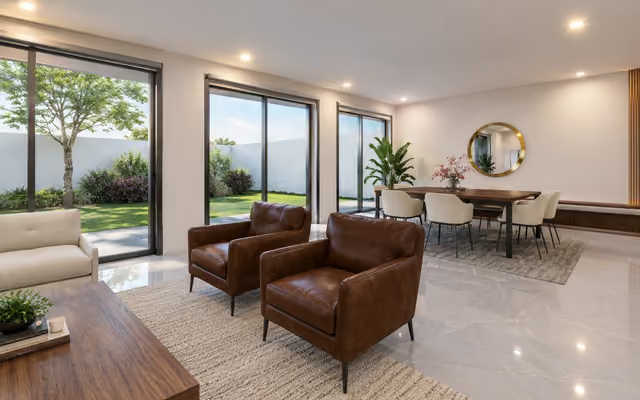
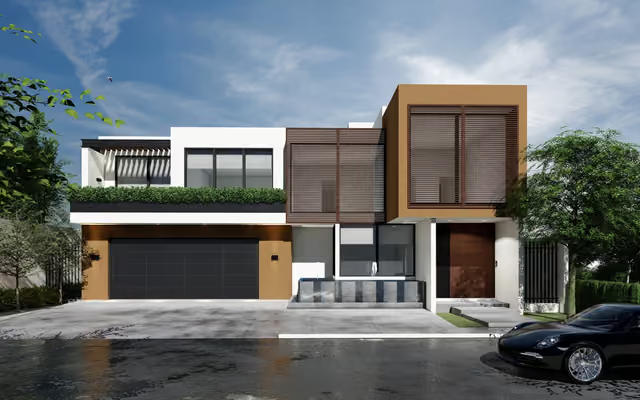
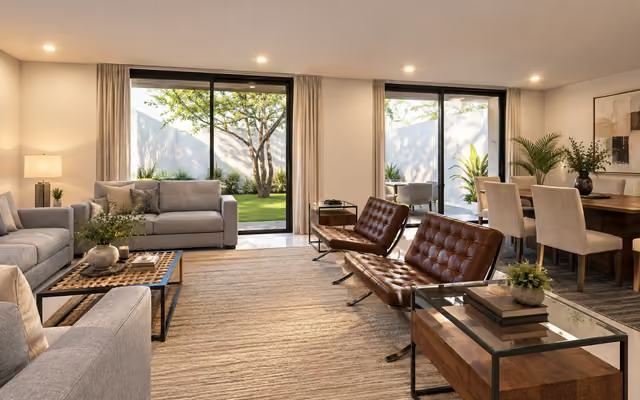
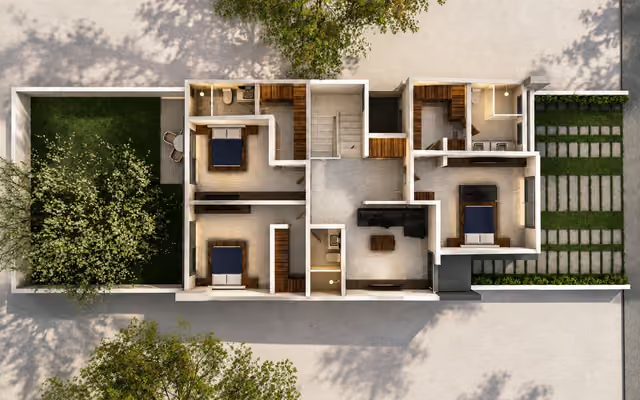
A studio in Mexico works in the same time zones as the United States. A preview sent at 10 am gets your comments at 11 and the revision in the afternoon. Communication is in English, quotes and invoices are in US dollars, and the cost per image is a fraction of a US studio’s because the team lives where the cost of living is lower. Our outsourcing service is built on exactly that: the responsiveness of an in-house artist at the cost structure of an outsourced one.
Side-by-side comparison
| In-house | Freelancer | Offshore studio | Nearshore studio | |
|---|---|---|---|---|
| Cost model | Fixed salary, software, hardware | Per image or per hour | Per image | Per image |
| Cost per image | High when volume is low | Lowest | Low | Low (from $120 USD) |
| Time zone | Yours | Varies | 10 to 14 hours apart | Same or one hour apart |
| Revision loop | Same day | Varies | Two days | Same day |
| Style consistency | High | Low | Medium | High, with a style reference |
| Capacity when busy | Fixed | Fixed | Scales | Scales |
| Who manages quality | You | You | Studio | Studio, with your previews |
What an in-house position really costs
Firms that compare the salary of a visualizer with the cost of outsourcing usually forget three things. The first is utilization: a salaried artist is paid for 2,000 hours a year, and in most firms far fewer than 2,000 hours of rendering work exist. The second is the stack: rendering software, asset libraries and a rendering workstation add thousands of dollars a year, and the hardware is obsolete in three. The third is coverage: one person is on vacation, sick or overloaded exactly when the competition deadline lands.
Outsourcing converts all of that into a per-image cost that is zero in a quiet month and scales up in a busy one. Our rendering cost guide breaks down what that per-image price covers.
When in-house still wins
If your firm produces imagery daily, needs real-time rendering during design meetings, or works on projects under confidentiality that cannot leave the building, an in-house artist is the right answer, sometimes alongside an outsourced partner for peaks. The hybrid model is common: one person in the office handles quick studies and coordination, and a studio produces the final photorealistic images.
How to run an outsourced pipeline that feels in-house
The firms that get the most out of outsourcing treat the studio as a department, not a vendor. These are the practices that make the difference.
- Agree on a style reference once. Camera heights, lens, time of day, how much entourage, how saturated the post-production. We keep a style sheet for each firm and apply it to every project, so the images look like one studio made them, because one did.
- Standardize what you send. A model or plan set, the finish schedule, a short brief with the purpose of each image and the deadline. The checklist of files for a rendering covers what matters.
- Use the preview stage. Comments on materials, lighting and cameras belong at the preview, when they are cheap. Comments after the final render mean rendering again.
- Keep one point of contact on each side. One person in your firm who collects the comments, one at the studio who knows your projects.
- Batch the work. Sending all the views of a project at once costs less than sending them one by one, because the model is built once.
Questions to ask a rendering studio before you commit
- Can I see projects similar to mine in your portfolio?
- Are preview views included in the price, and how many revision rounds?
- Is the quote itemized per view, in US dollars?
- What are your working hours in my time zone, and who answers my emails?
- Will the images be delivered without your branding?
- How do you handle a second phase of the same project months later?
A studio that answers all six clearly is one you can plan around.
Working with us
Realidad Arquitectónica has produced renderings and animations for architecture firms, interior designers and developers for more than 14 years, and works with US firms as a nearshore partner. See how we work with architects and interior designers, or send a first project through the quote form: you will receive an itemized quote in USD the same business day.