How Much Does Architectural Rendering Cost in 2026?
US studios typically charge $600 to $2,500 per still image. Here is what you are paying for, what moves the price, and why a nearshore studio can deliver the same quality from $120 USD per image.
Published October 27, 2026
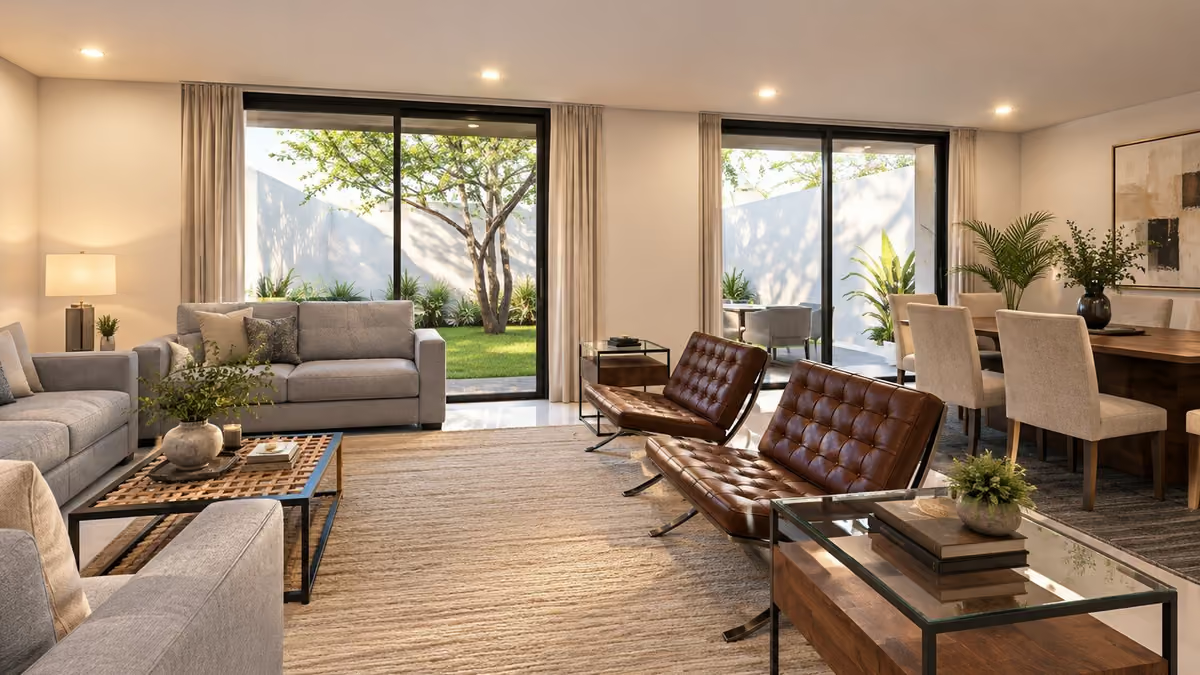
The short answer: in 2026, a professional photorealistic rendering from a US studio costs somewhere between $600 and $2,500 per still image, with residential exteriors at the higher end and simple interiors at the lower end. Freelancers charge less and deliver less consistently. A nearshore studio like ours charges $120 to $200 USD per image for the same photorealistic standard, because our costs are in Mexico and our clients are in the United States.
The long answer depends on what you are rendering, how many views you need and how much of the work you can hand over ready to go. This guide walks through the real price ranges, what drives them, and how to get a lower quote without getting a worse image.
What you are paying for
A rendering is not a button somebody presses in a program. Every image you have seen on a developer’s website or in an architect’s portfolio went through five stages of work, and the price covers all of them:
- 3D modeling. The building, the site and the interiors are built in 3D from your drawings. If you send a SketchUp or Revit model, this stage is shorter; if you send PDF plans, it is longer.
- Materials and furniture. Every surface gets a real material with the right color, sheen and texture, and every room gets furniture, fixtures and accessories at the right scale.
- Lighting and cameras. The sun is set to the orientation of the site and the time of day you want; interior lighting follows the lighting design. Camera angles are chosen to show what the image needs to sell or explain.
- Rendering. The computer calculates the image. A high-resolution still takes hours of machine time; an animation, with 24 to 30 frames per second of video, takes far longer.
- Post-production. Color, contrast, sky, vegetation, people and vehicles are refined so the image reads as a photograph.
Most of the cost is skilled labor in stages one to three and five. That is why the price varies so much between providers: it depends on where the people doing the work live, and on how many hours the project takes them.
Price ranges in the United States in 2026
Published US price guides agree on a wide range. A survey by Frame Sixty puts a standard still at $250 to $5,000, with most studio work between $600 and $2,500. MyArchitectAI reports residential exteriors at $800 to $2,800 per image at studios and $300 to $1,500 at freelancers, and architectural flythrough animations at $4,000 to $12,000 per finished minute. Cad Crowd lists commercial interiors at $450 to $2,500 per image and aerial views from $1,000 to $3,000.
Here is how those figures compare with what we charge:
| Image type | US studio (published ranges) | Realidad Arquitectónica |
|---|---|---|
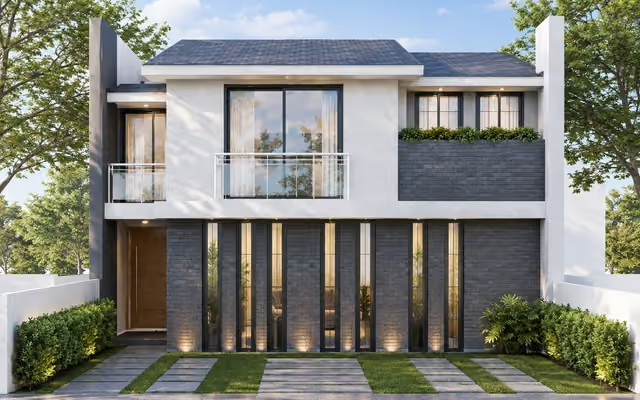
| Residential exterior | $800–2,800 per image | from $120–200 USD per image |
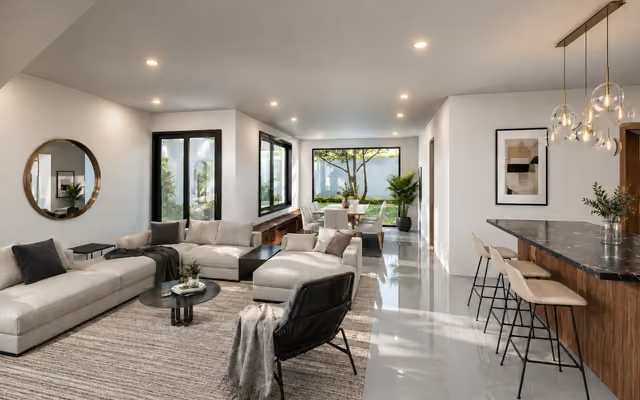
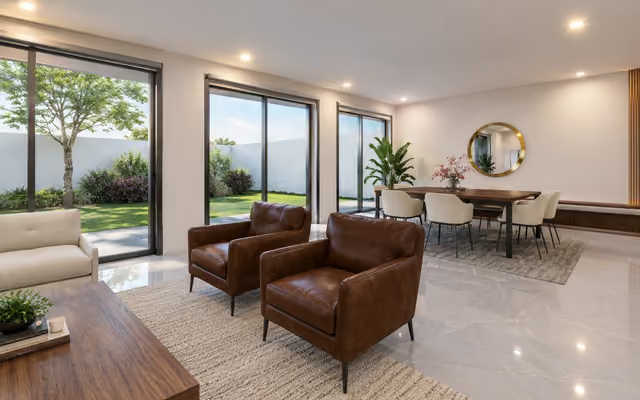
| Interior view | $450–2,500 per image | from $120–200 USD per image |
| Aerial or site plan view | $1,000–3,000 per image | quoted per view |
| Walkthrough animation | $4,000–12,000 per minute | from $500 USD per 30 seconds |
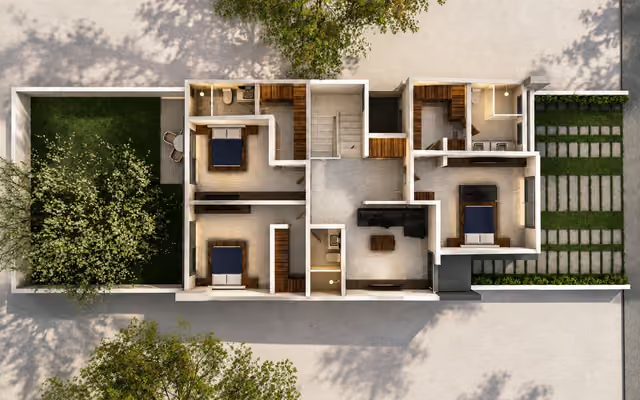
The US figures are the ranges reported by the guides linked above; freelancers come in lower, at $300 to $1,500 for a residential exterior according to the same sources, with the trade-offs described below. Our figures are starting prices: an itemized quote in USD is sent the same business day once we see your drawings. Rendered 3D floor plans are quoted per plan and are among the least expensive images we produce.
Why the gap? Not quality. The images in our portfolio are produced with the same software, the same workflow and the same review process as a US studio’s. The difference is that our team is in Guadalajara, Mexico, where the cost of a senior 3D artist is a fraction of the cost in Austin or Denver. We work in English, in US Central Time, and quote and invoice in US dollars. The outsourcing page explains how firms use that difference on a recurring basis.
What moves the price up or down
Two renderings of the same house can cost very different amounts. These are the factors that matter.
Number of views
The model is built once. The second, third and fourth images of the same project reuse it, so each additional view costs less than the first. Ordering the views you need together is the single biggest lever on the total; adding a view three weeks later means reopening the project.
Complexity and size
A 2,500-square-foot home with two materials is faster to model than a 40-unit building with balconies, railings and signage. Interiors with custom millwork, specific furniture pieces that have to be modeled, or many small objects take longer than a clean, contemporary room.
Context and site
A building on a white plane is cheap; a building on its real site, with neighbors, grading, mature trees and a view, is more work and a far better image. For aerial views and master plans, the site is most of the job. Drone photography of the real lot reduces modeling time and improves the result.
How complete your documentation is
A finish schedule, elevations, sections and a furniture plan let us build the image without guessing. When the documentation is incomplete, we either ask questions or make assumptions, and both add rounds of revisions. See what to send for a rendering for a checklist.
Revisions
Every quote includes preview views for you to adjust materials, lighting, furniture and camera angles before the final render. Changes at that stage are part of the price. Changes to the design itself after the final render, such as moving a window or changing the roof, are design changes and are quoted separately.
Resolution and format
Images for a website or a presentation are rendered at a resolution that covers a large screen. Billboards, trade show graphics and large-format print need higher resolutions, which take longer to render and are quoted accordingly.
Variants
A second color scheme, a night version or an alternative material package of an image that already exists is far cheaper than a new view, because the model, cameras and lighting are done. Builders use this to render every elevation option of a plan without paying for every one as a new image.
How much do architects charge for renderings?
Many clients ask their architect for renderings and receive a line item on the invoice. Most architecture firms do not render in-house; they commission a studio and pass the cost through, sometimes with a coordination fee, or they include a set number of views in their design fee. If you are an owner, it is reasonable to ask which it is. If you are an architect, see how we work with architects and design firms: the quote is itemized so you can pass it through transparently.
How to lower the cost without lowering the quality
- Order the full set at once. Exteriors, interiors, the aerial and the floor plan from one model cost much less than the same images ordered one at a time.
- Send the model if you have one. A SketchUp, Revit, ArchiCAD or Rhino file removes most of the modeling stage.
- Decide the cameras at the preview stage. Changing an angle after the final render means rendering again.
- Provide the finish schedule and references. Guessing produces revisions; a schedule produces a correct image on the first preview.
- Reuse the model for video. A walkthrough animation produced from the same model as your stills starts at $500 USD per 30 seconds; produced from scratch it would cost many times that.
- Ask about recurring pricing. Firms that send work every month get a stable rate per view and a team that already knows their standards.
Is a cheap rendering a risk?
Yes, if cheap means a freelancer without a review process, a template model dressed with stock furniture, or an AI image that ignores your drawings. The risk is not the money; it is presenting a client or a review board with an image that does not match what will be built. The protections are simple: look at the provider’s portfolio, ask whether previews are included, and check that the quote is itemized per view.
A nearshore studio is a different thing from a cheap one. The savings come from geography, not from skipping stages.
Getting an exact quote
Send us your drawings or model, your material references and a note on how the images will be used, through the quote form or by email. You will receive an itemized quote in US dollars the same business day, with the price of each view, so you can decide exactly how many images the project needs. Exterior and interior renderings start at $120 to $200 USD per image.